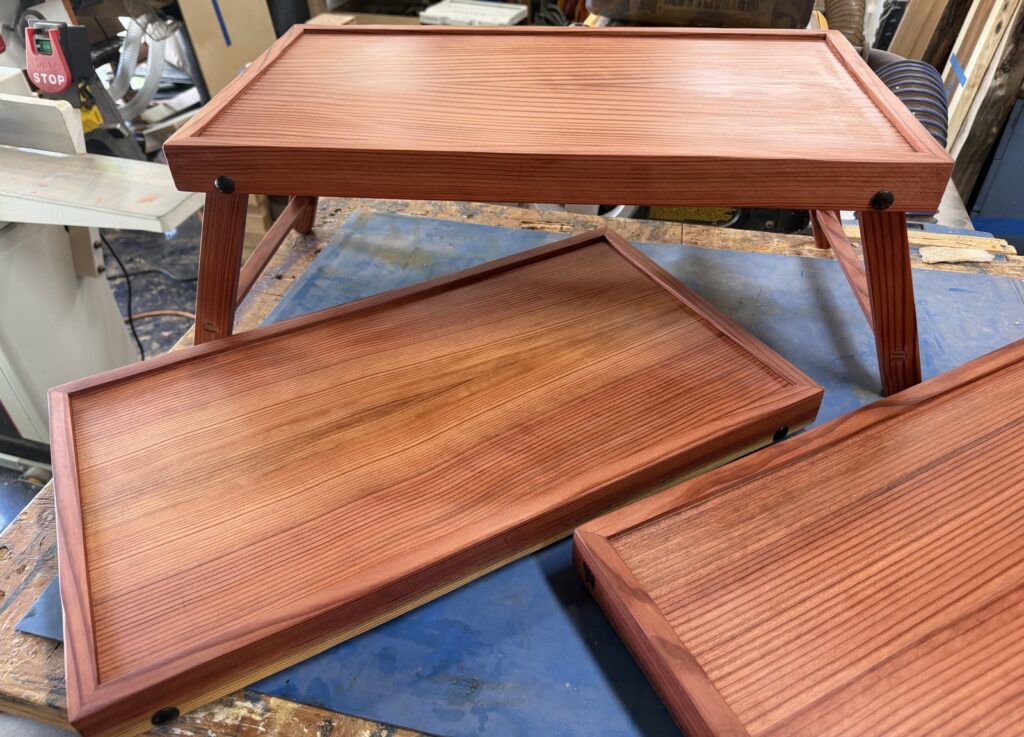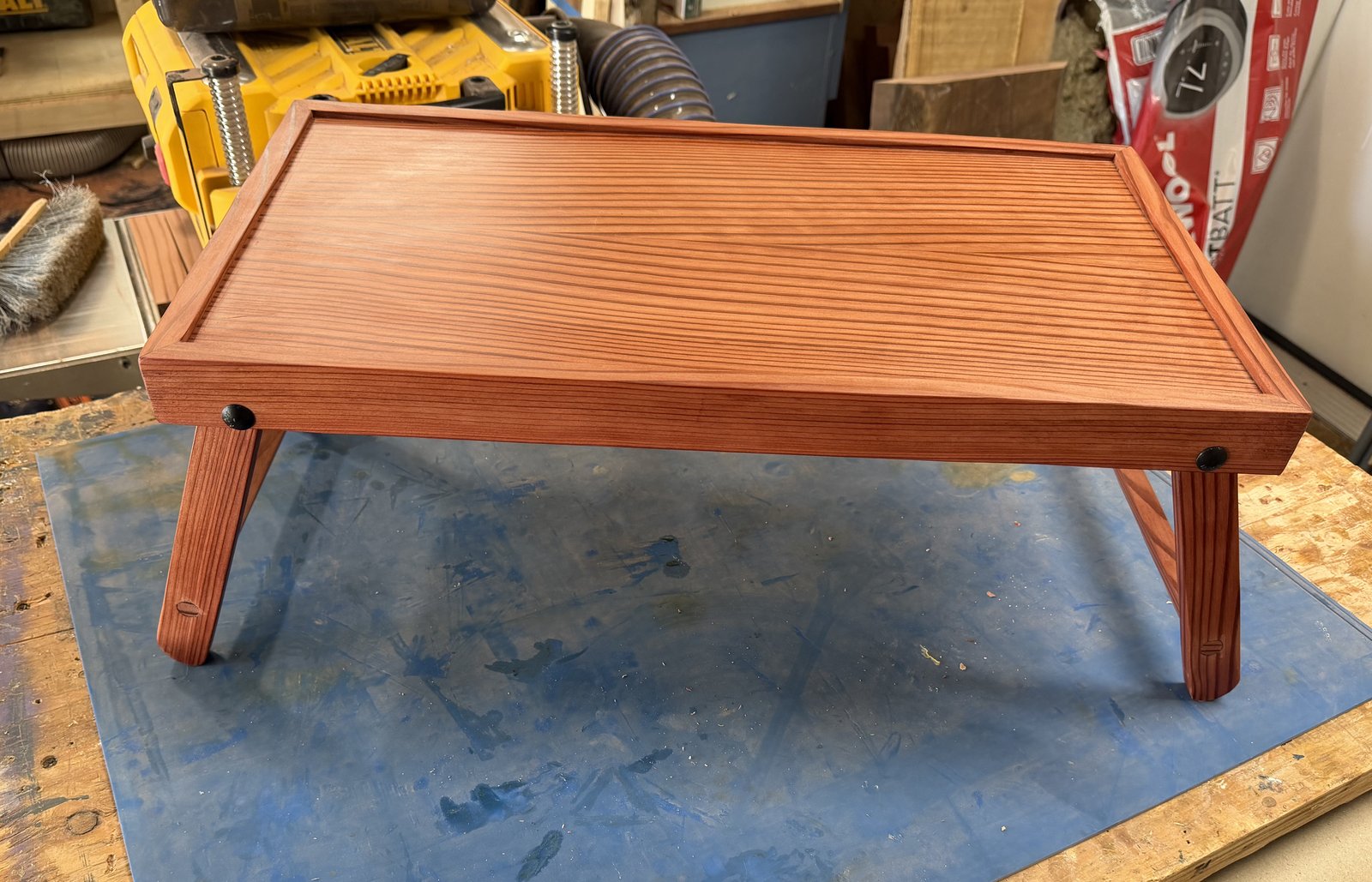
Somewhere in Los Angeles a redwood came down. It could have gone into a chipper, which is where most city trees end up. Instead it went to Street Tree Revival, who mill urban timber that would otherwise be waste, and a few of its boards found their way into my shop as 22″ x 7″ x 2″ billets.
Heavy, rough, and a long way from anything you would set a coffee cup on. This is what happened to them: three folding serving trays, built start to finish, and all three given away as gifts.
Where the wood came from
Redwood has a reputation as a deck and siding timber, and it is soft enough that you pay attention every time you handle a finished edge. What it also does, better than almost anything, is take an oil finish. The color that comes up out of salvaged redwood when the first coat goes on is the whole reason to build with it.
This board grew in Los Angeles. It stood for decades before it came down. That history does not change how it cuts, but it does change how it feels to work.
Breaking down the billets
Most of a build like this happens before anything looks like a tray.
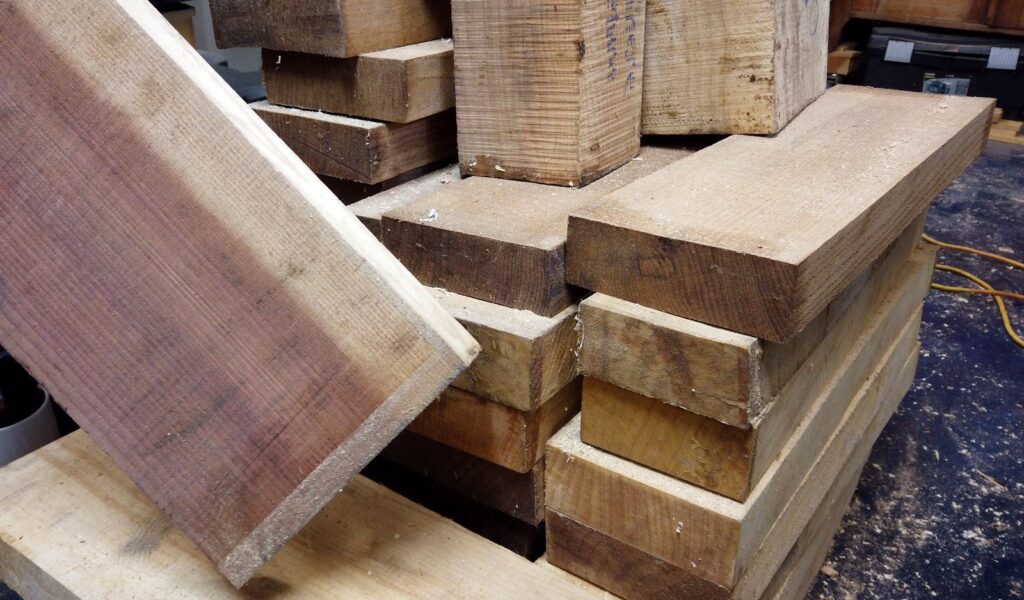
Every billet starts on the jointer: one face flat, one edge square to it, so there is a reference to measure everything else from. Then to the bandsaw, where each one gets resawn in two. A 2″ billet opened up gives two boards a shade under an inch, and it is also the first honest look at the grain inside. You do not really know what you have until you split it.
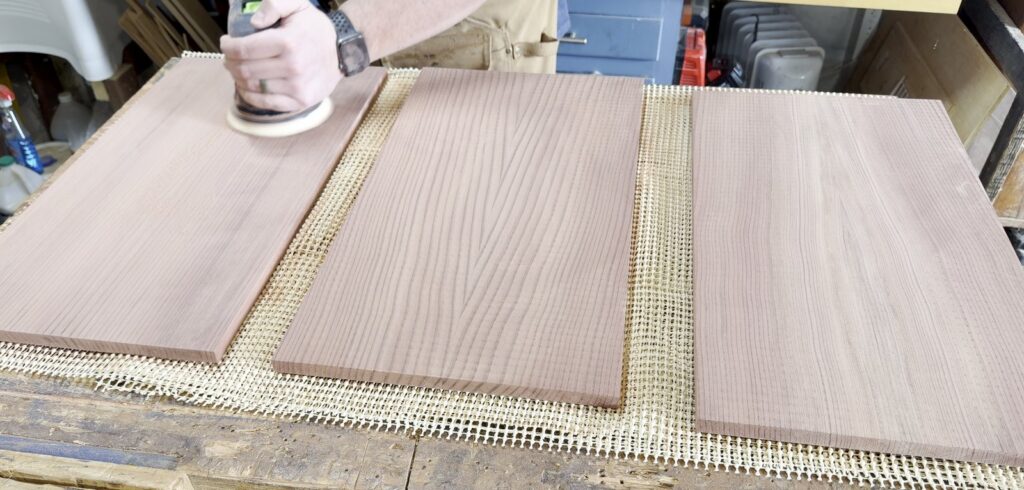
From there the boards go through the planer down to final thickness, and then it is ripping and crosscutting to size: wide stock for the tray panels, narrow strips for the frames, blanks for the legs and rails. By the time the first clamp goes on, a good stretch of the work is already behind you.
Panels and frames
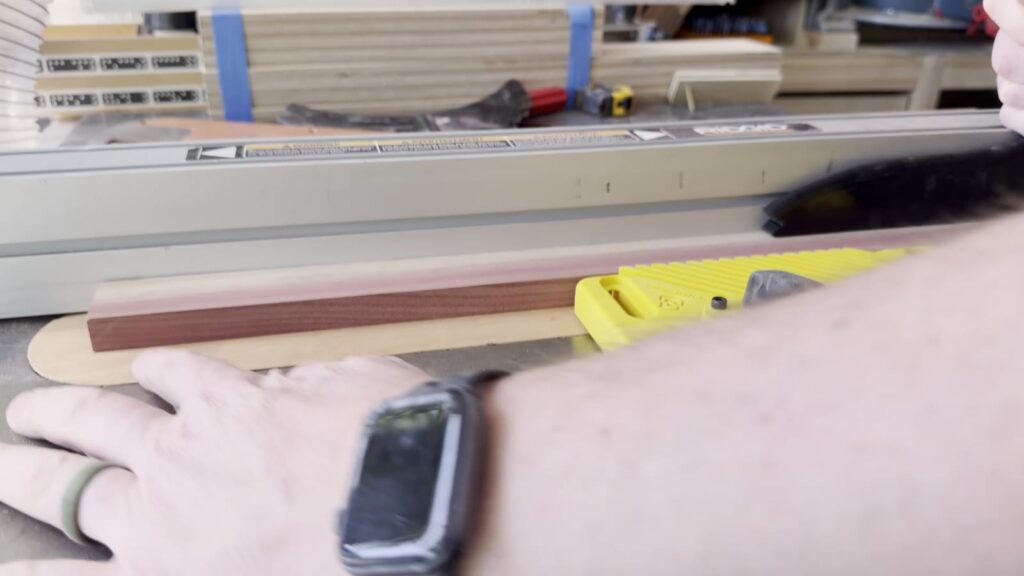
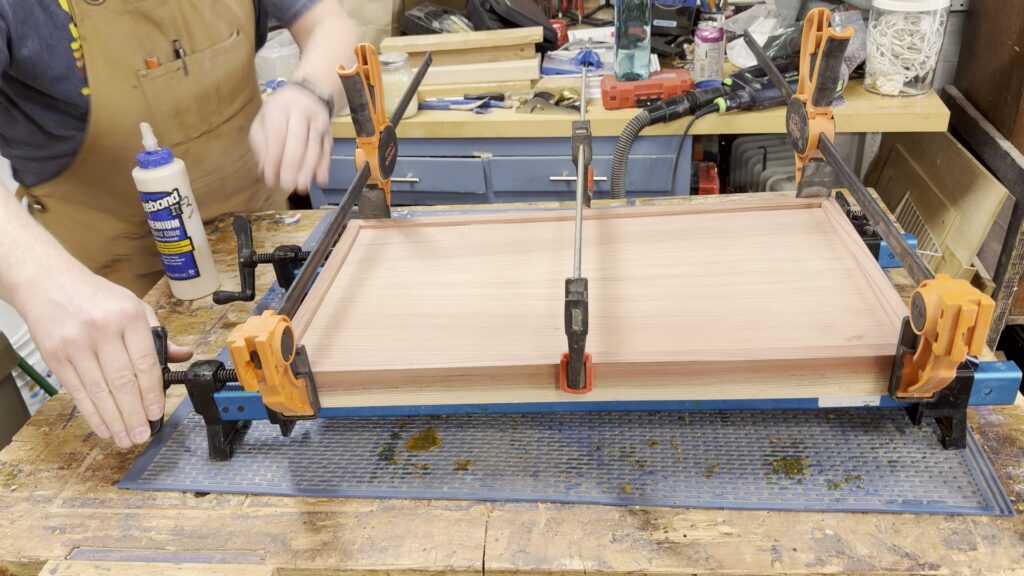
The tray bottoms are glued-up panels. The frames around them are rebated on the table saw so the panel sits in a groove rather than being fixed hard. Redwood moves with the seasons, and a panel that cannot move is a panel that splits.
Frames get checked corner to corner while the glue is still wet. If the diagonals match, it is square. If they do not, you have about two minutes to do something about it.
The folding legs
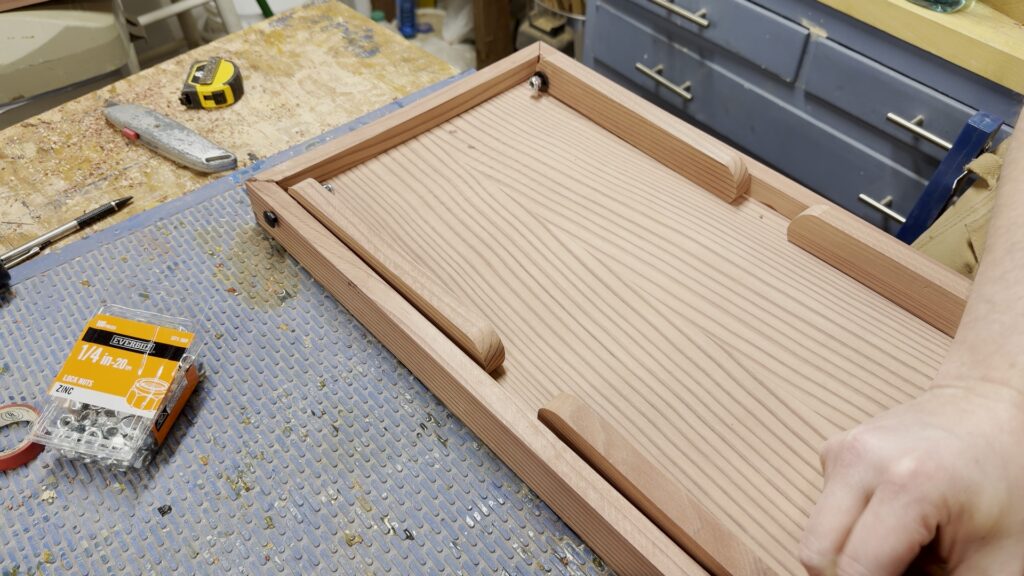
The legs mount on the long sides of the tray, which is what lets them swing flat underneath. Each pair is joined by a rail, tenoned into mortises cut in the legs, so the pair moves as one piece and stays rigid once it is open.
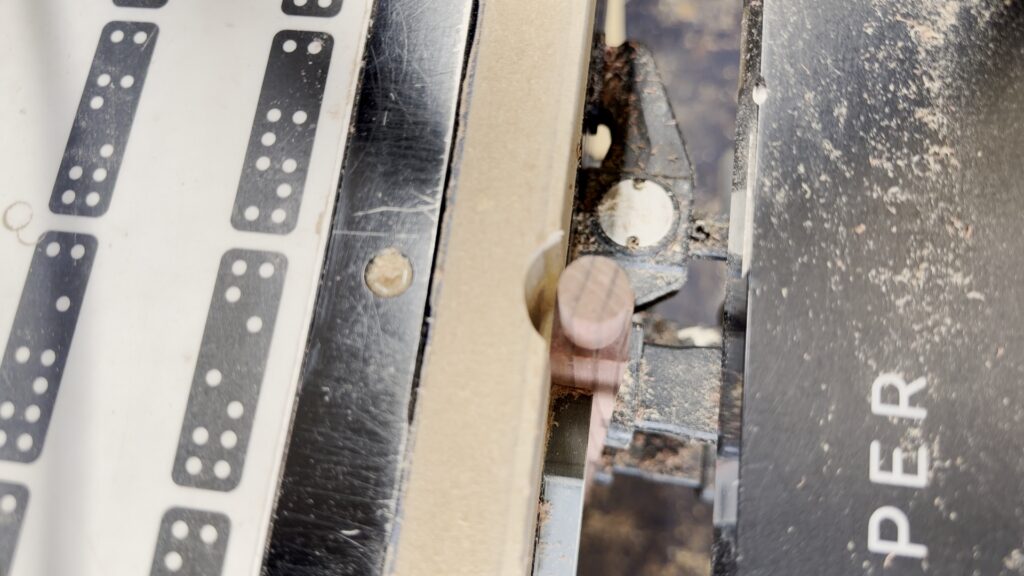
That meant drilling the pivot holes accurately in both the legs and the tray. Everything about how a folding tray feels in use, whether it sits flat, whether it rocks, whether it folds cleanly, comes down to those holes.
Oil and wax
This is the part that makes the whole build worth it. Sanded redwood is pale and a little lifeless. The first coat of oil takes about four seconds to turn it deep red, and grain that was invisible a moment earlier comes up through the surface like it was always there.
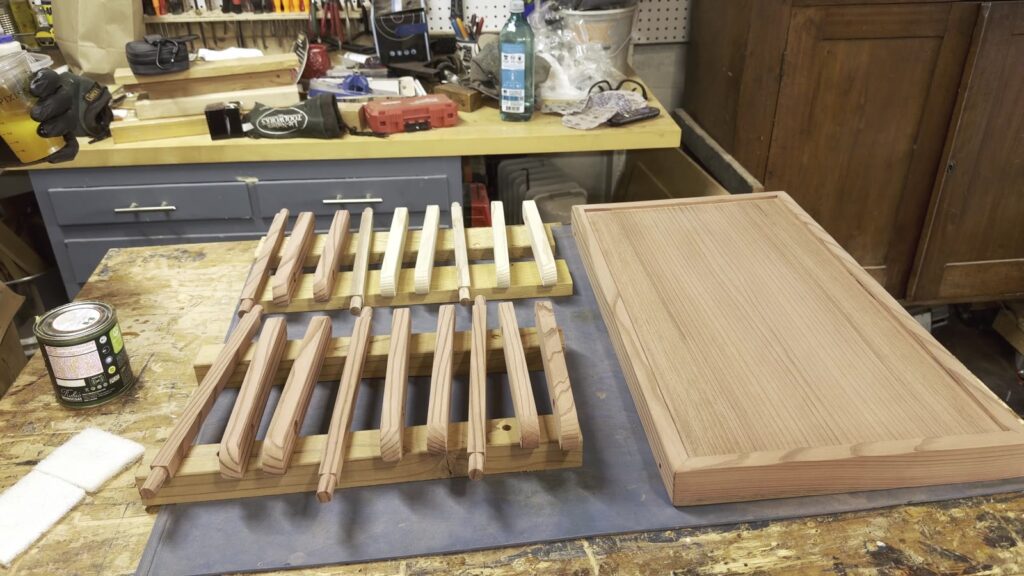
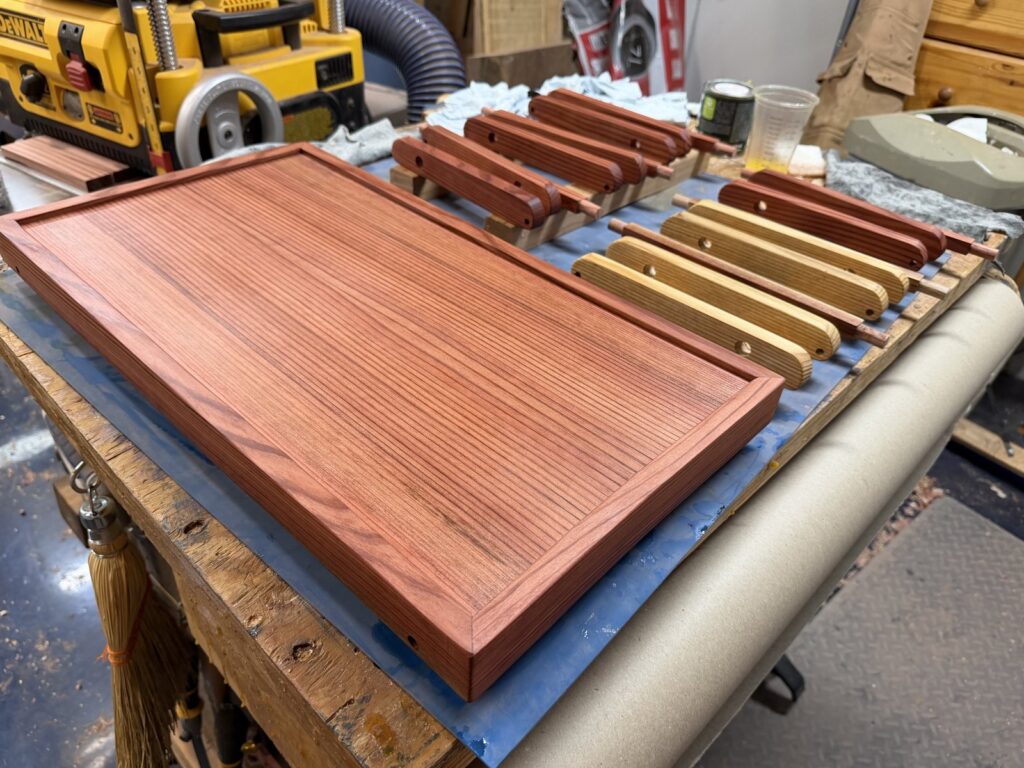
Wax over the top once the oil has cured, then the branding iron, and they were finished.
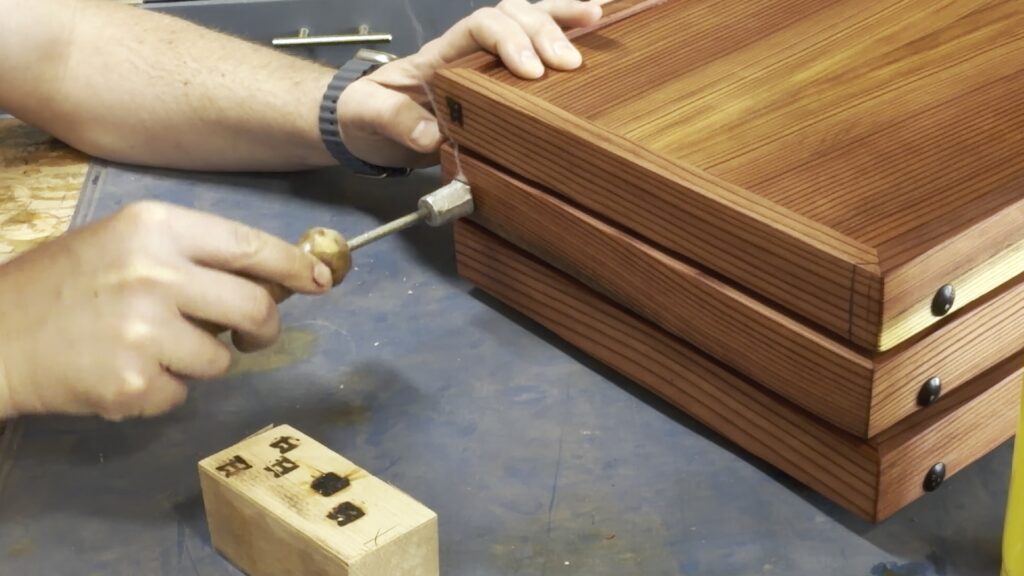
Three trays, three gifts
All three of these went to family as a gift. That was the point of building them.
If you would like one of your own, or something else entirely, a custom gift or a piece of furniture, get in touch through the contact page. I am always glad to talk a project through.
And if you would rather watch it than read it, the full build is in the video above.